
Ask the Grid (ATG) is a unique artifact speaking to the state of creating software today.
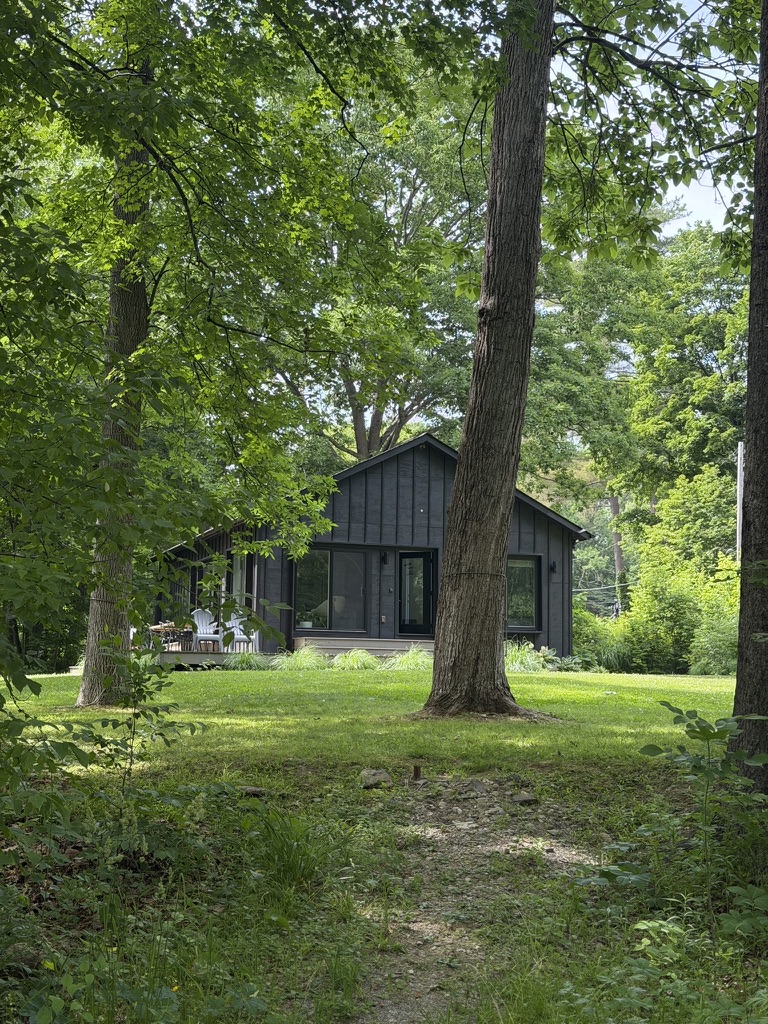
Recently, I was up in the Hudson Valley for an in-person hackathon / planning session.
Since I left Automattic, we’ve been forming a startup building foundational technology to model and control complex systems. The progress in just a few weeks is almost astounding; Going greenfield, with crazy talent density, in person unlocks crazy speed.
And it’s not just shiny front ends. I’m talking about literally pre training models. Data ingestion systems for massive amounts of events. Agents that build boutique interfaces, and the list goes on.
(the hacker house for the week)
We’ve been getting very deep in the energy world, and because of that, have access to a lot (trillions of points) of data about how the US grid operates. Something that we’ve really wanted is an easy way to interact with all of that data – which is very spatial and temporal.
A few weeks ago I tweeted about some of the visualization work that we were doing. This was the precursor of what became Ask the Grid.
Under the hood, there’s a lot of fun stuff here. We manage billions of rows and trillions of geospatial data points which are served and made queryable in milliseconds due to the awesome product that is Clickhouse. An agent can then easily understand the shape of that data and how it should interact with it. Because this is such a new quick product, we had the opportunity to play with Vercel’s new agent framework, Eve.
It worked quite well! In fact, internally we were already interacting with this data in a very agentic way and had created dozens of extremely detailed Agent Skills, which we simply moved over to the agent that now exists on ATG.
I opened by calling this a unique artifact. And it really is, because this style of platform would have taken months to years to realize in its current form, if built without AI. Of course, we are reusing pieces of our bigger platform. But to go from concept (with those prior visualization references) to askthegrid.com launched and live, it took just 3 days.
The way we built it was prescriptive. There were tons of detailed specs and sketched interface diagrams that we pulled together by hand on iPads. Architecture followed a maturing data infrastructure system that already had well-documented schemas and was essentially built for agents. to interact with. The technologies were chosen first to manage the scale of data that we interact with, but second, in service of being able to continually improve the platform leveraging AI. All of the standard ingredients like NextJS were used.
Building as a team in this way is easy, if you plan properly from the start. Constitution.md, agent.md, And an agreed-upon workflow that leverages Git, PRs, AI code reviews, scheduled red teaming,aAnd production testing works well. Obviously the GitHub flakiness that is plaguing our industry right now impacted us as well. But it wasn’t enough to move to something like every or Linear.
It definitely is important to understand when to stop. I’ve always liked the concept of simple, lovable, and complete (shoutout Jason Cohen!). But when you build in this way, it’s easy to build past that simplicity. Anchoring in real customer usage at scale (in this case, working with utility companies, co-ops, and power traders) is a much better way to steer a product.
There’s a cold start of actually getting these folks on board and helping them understand that if they have a feature idea, we can build it in a matter of minutes, but once we get past that, this type of super concentrated PLG is not only possible, but easy!
This is just one small distillation of the platform that we’re building in service of intelligent control for autonomous industry.

Once you have all of the foundational components (which are still quite hard to build!), it becomes really easy to solve and service so many problem spaces in the world. Every one of our customers will have a boutique visualization, should they want it, that sits on top of components like massive scale data ingestion, and foundational decisioning models specific for each account.
Ask The Grid is just one small sliver of the work that we’re building, but a great precursor and signal to how everybody is and will build products like these into the future.