Over the course of the past few months I’ve been posting on LinkedIn, chatting on podcasts, and tweeting about slivers of what I’m working on. People are wondering what I’m doing! Don’t look at this as an official launch, that’s to come in the future, but because there’s enough publicly out there and privately worked out, I have enough to blog about it.

Paul Hultgren, Matt Miller, and I have founded a company called Parisi Labs. It’s an AI startup focused on researching and commercializing our flavor of “World Models” for physical industry. The goal is big; build a system that can ingest any and all data about the state of a world or a system within it, balance possible futures with constraints, and take accurate, helpful action. In other words, “a decision machine”.
Right now, we’re building out of a house in Cambridge, MA, a few minutes away from MIT and Harvard. There are monitors all over the place, whiteboards on the wall, and folks coming and going. Real startup vibes. But despite the vibes, it’s getting too small, and we’ll end up in an office soon. We’re hiring in both Boston and NYC, and mindfully building a company of immense talent density, absurd velocity and doing it in person.

Depending on who you ask, “world model” means one of several things (ask a robotics lab and you’ll get a very different answer from a generative environment company). To us, the definition is almost literal. We live in a universe abundant with data, and a world full of existing systems that need to 1) operate more efficiently and 2) expand effectively. Historically, both jobs have been handled by painstakingly modeling individual drivers of what might happen, then manually weaving that foresight together with hindsight to get a blurry picture of what you should actually do (or, maybe even more likely, a dude who eyeballs a couple of spreadsheets, takes a deep breath, and makes a call).
A world model takes a new and different approach. It takes in all the data you have and learns how it interacts with its environment: where the hard constraints are, where performance can be found, which odd signals inform an outcome. What comes out is a much clearer, higher-resolution picture of what to do. We’re really “modeling the world” in service of better controlling and allocating resources within the systems that power it.
In physical systems, that picture also has to account for the consequences of your own decisions. That has historically been really hard. You can build great forecasting models using XGBoost or something, but how do they account for the fact that taking the action changes the future you end up in? (In isolation, they can’t!) That’s the second half of our definition. It’s not just learning jointly from diverse data, and not just producing probable futures. It’s also learning how an action changes the system itself, then saying “do this” with all of that context and foresight.
We wrote the longer version up in our thesis, World models for the systems that run the world.
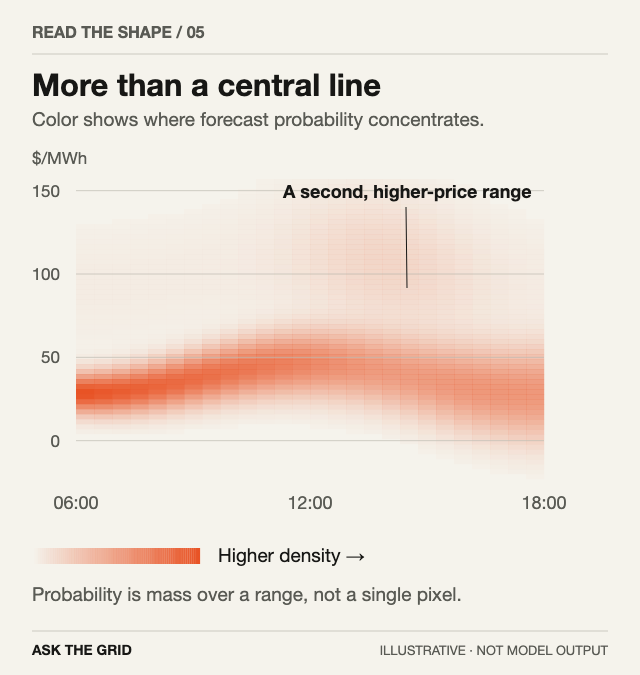
We’re starting with power. It’s a beautiful system with massive problems that need to be addressed today. We’ve run out of grid. How and where do we build what’s needed while using what we have more effectively? We recently posted about this on the company site too, but we are already able to better discharge utility scale batteries, route power more effectively, determine where assets need to exist in the long term, understand what demand will look like in the future, the list goes on… and the exciting thing is that all of these questions can be answered by one model and system, not many.
Paul, our CTO, and I go back to college. We met in the Blackstone LaunchPad, and from my first interaction with him, it was clear that we were going to co-found something together. Matt, our CSO, and I met at Automattic and worked together closely – him as Head of Data / ML and me starting as Eng. Director for AI, and ending as Head of AI. In both of their own ways, Paul and Matt are the smartest people I’ve ever met. Paul is a clear 100x engineer with the thinking of an architect, and Matt is a brilliant scientist that deeply understands ML, transformers and “actual AI” like it’s his first language. The three of us combined have touched billions of end users through our prior work, and there’s nobody else in this world I’d want to cofound this shape and style of company with.
As I wrote in some other posts and tweets, I’m mind-blown by the speed that we can work at nowadays, especially when you build systems that allow you to leverage AI in sustainable ways. Our team has already launched models (that in some ways are just an artifact of our bigger-picture research) that outperform incumbents by double digits in fair head to head comparisons. We’ve collected several trillion rows of helpful, organic time series at this point, and built a platform to manage and activate it. We’ve launched a consumer surface growing its user base exponentially, simply because of its quality and speed of shipping. In the past, each individual component of what we’re building in service of our vision could have probably been a startup of its own. Today, they’re all just bricks in the foundation of the skyscraper we’re setting out to build.
For those that have worked for and with me in the past, you’ll know that I love parallel work streams in service of a massive end goal. It’s what I deeply enjoyed about my work on Open Source and at Automattic – big vision, an a swarm of dependent and additive efforts to get there. Parisi is no different.
We’re really building towards these systems that model the world, and doing so in a fun composition driving the waltz between research and engineering.
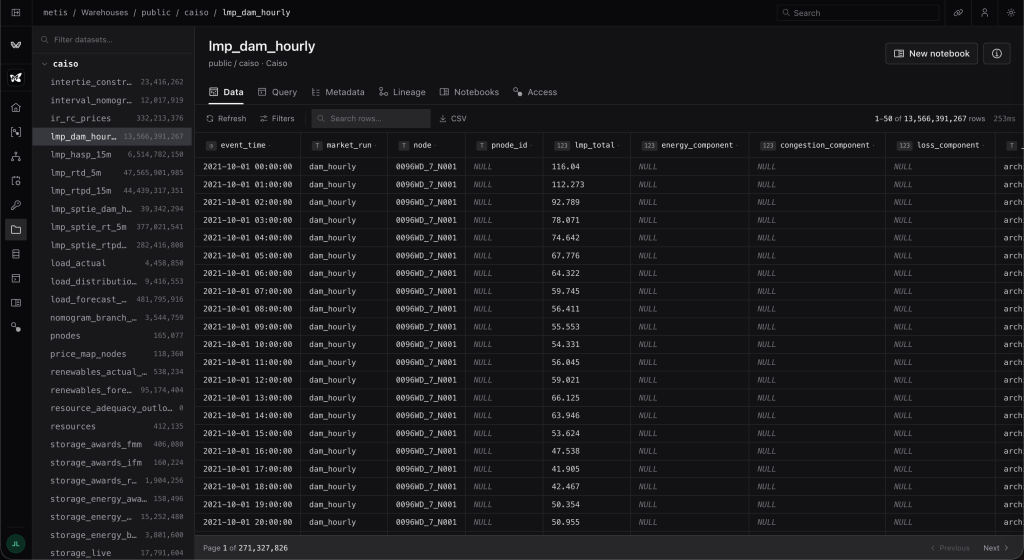
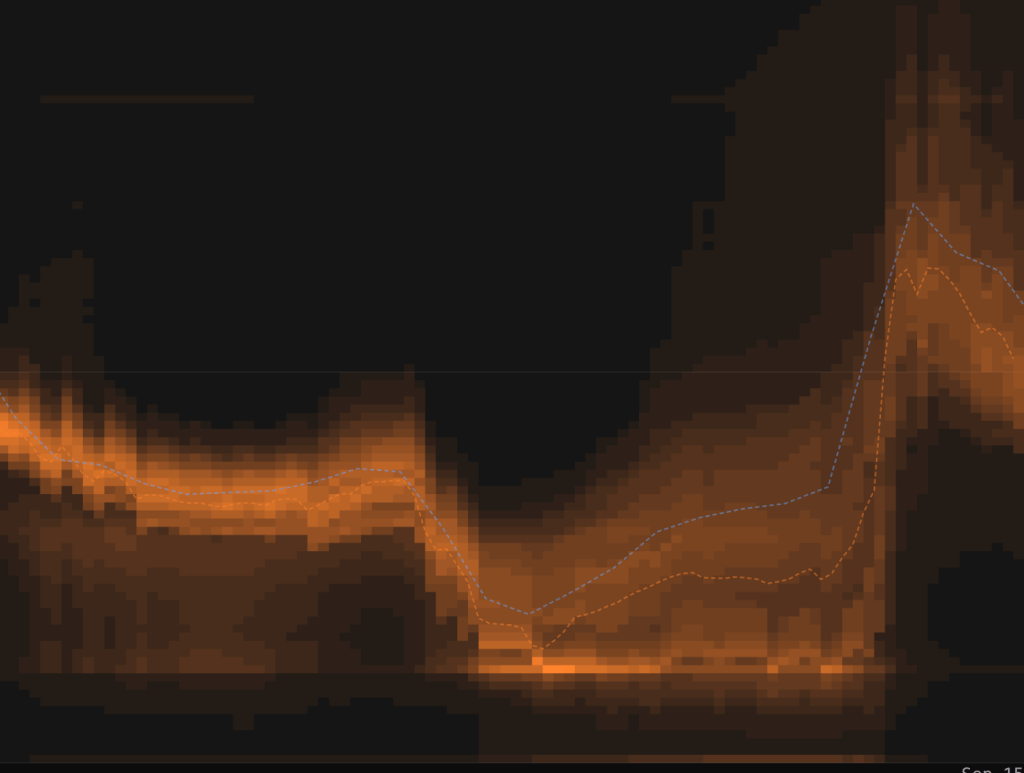
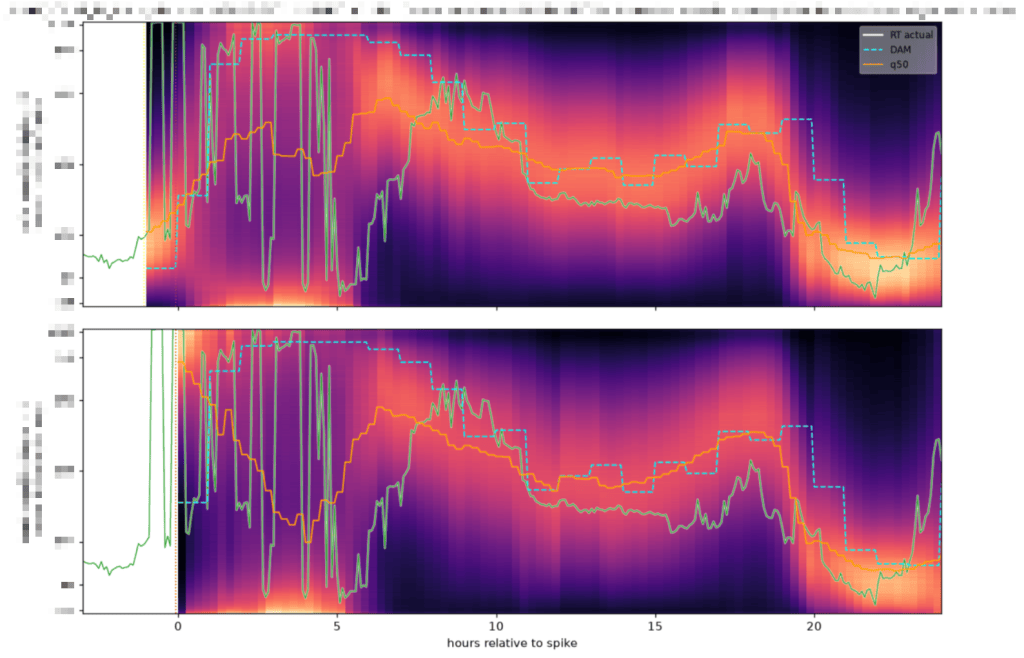
The things you’ve seen, and will see in the coming months, are components that work together and form into a bigger surface. AskTheGrid is our “system explorer”, energy bounded for now. It draws on our Parisi Data platform (screenshot below), from the energy catalog and exposes trillions of time series observations through geo and temporal visualizations, alongside a great “traditional” AI agent. That same data platform and collection go into pretraining our models, the first being Metis 1 which as of publication is out as a preview for our design partners. It’s a general probabilistic forecaster for price, load and generation that generates all of this from one single base and supports any grid (specifically built for US ISOs and utilities). We classify it as a Foundational System Model (world model precursor), and it clearly improves with scale, while already beating everything else we’ve compared it to on accuracy and capability. Soon, it’ll produce ranked actions by balancing constraints – growing from foresight only to true decisioning.
There’s an expansive vision and several workstreams, but a lot of synchronicity and parallel threads soon to weave into an incredible version one. I’d invite you to keep an eye on what we’re up to – I’ll continue “live tweeting”, and we’ll be doing a more formal launch in a few months.
And importantly, I’m having a lot of fun! Not only do I get to work with people way smarter than I am (and learn new things every couple minutes because of that), but I’m working at the intersection of bleeding edge research, on massive problems with huge impact once solved. There’s the taste of mission, discovery, and a massive vision here.
And of course, absolutely dope dashboards and visualizations (just look at AskTheGrid – every surface should be on a big screen in a mission control room, imho).


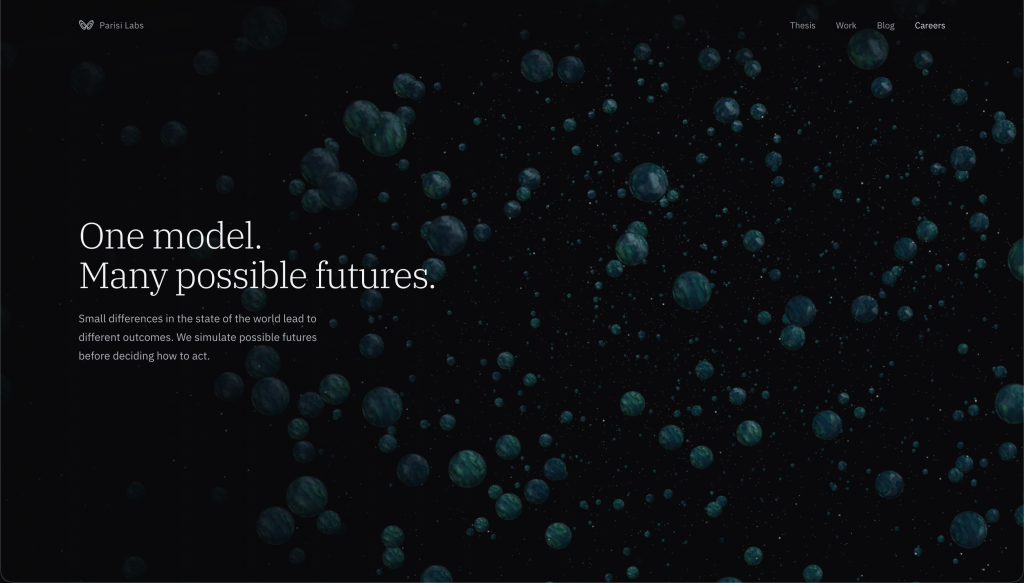
If you want to build with us, I’d love to have you here (in person, ~3 days a week, in Boston or NYC 😉). There’s a really special team shaping up, and it’ll probably be some of the most interesting work and fun problem space of your career. Please check out our jobs page and let me know if anything interests you.
I’ll be posting a lot more, but figured I should put up the canonical “here’s what I’m doing” post. I think it’ll be a fun reference to look back at in a few years.